
Why does my bathroom keep getting mould?
Most bathroom mould comes down to moisture with nowhere to go. A hot shower or bath fills the room with warm, damp air. When that air meets a cold wall, ceiling or window, it turns back into water, and if the room doesn't dry out properly, mould starts to grow.
The good news is that the cause is usually simple to find. This post covers where the moisture comes from, the most common reasons mould keeps coming back, what you can do day to day, and when it's a sign of something that needs fixing properly.
Where the moisture comes from
A single shower can put a surprising amount of water into the air. You see some of it as steam and misted mirrors, but much of it settles on surfaces you don't notice: the ceiling, the corners of the room, behind the toilet and along the top of the tiles.
Mould needs three things to grow: moisture, something to grow on and time. Paint, grout and sealant give it something to grow on. If the room stays damp for hours after every shower, it has the time it needs.
Poor ventilation is the most common cause
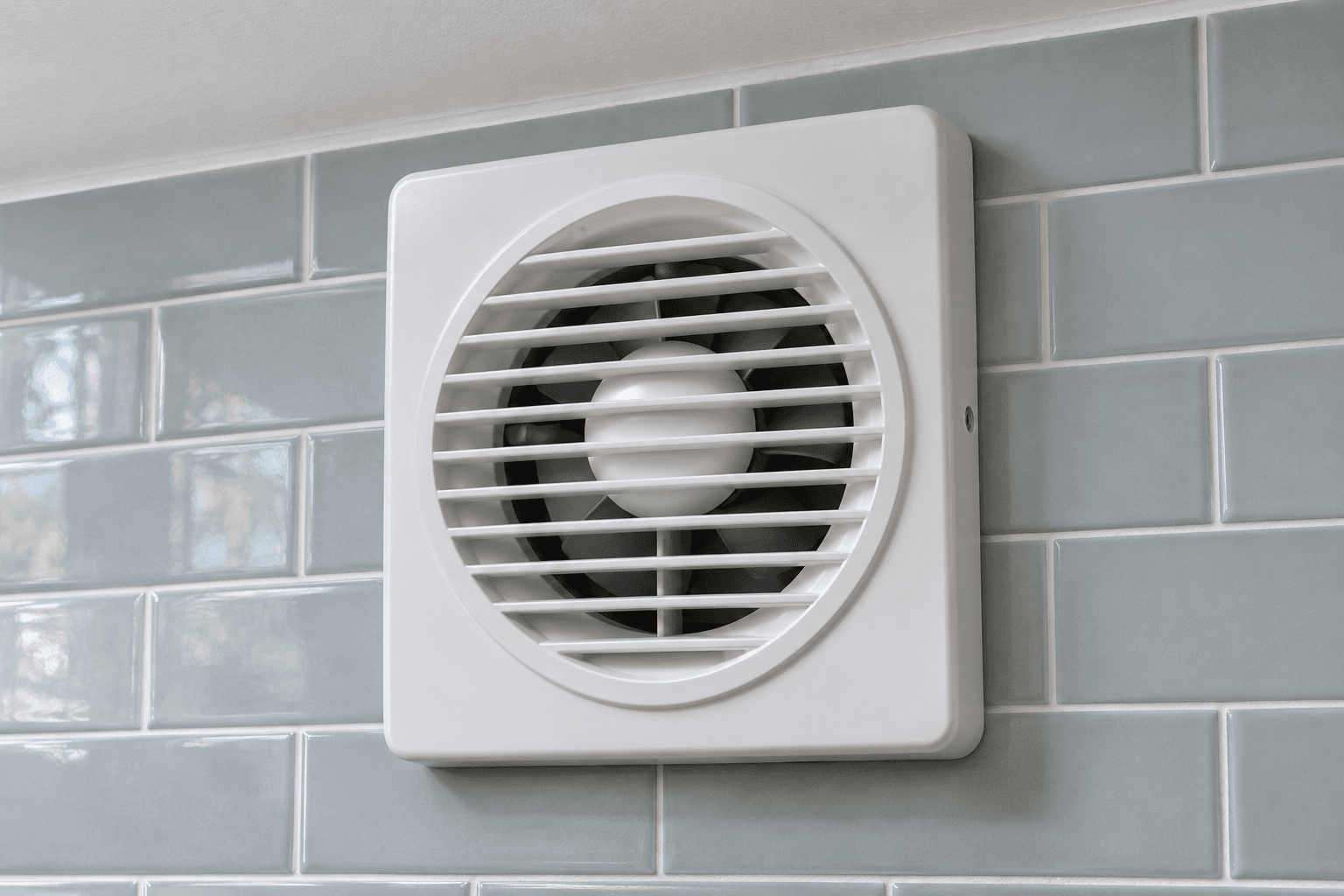
Damp air has to be removed from the room, and that's the job of an extractor fan. Mould often comes back because the fan isn't doing that job. It may be too small for the room, blocked with dust, or switched off as soon as you leave.
You can check your fan safely with a single sheet of toilet paper. With the fan running, hold the paper up to the grille. If the fan pulls it flat against the cover, it's working. If the paper barely moves, the fan isn't removing much air. Never take the fan cover off or open up the fan yourself, as it's connected to the mains.
A window helps, but on its own it often isn't enough, especially in winter when nobody wants it open for long.
Cold surfaces make it worse
Condensation forms on the coldest surfaces first. That's why mould often starts on an outside wall, in the corner where the wall meets the ceiling, or around the window.
Bathrooms that are rarely warm suffer most. A heated towel rail or radiator keeps the walls a little warmer and helps the room dry out between showers. In some older homes, cold floors and walls are part of the problem, and that's worth looking at during a renovation.
Tired sealant and grout
Mould loves the soft, slightly porous surfaces in a bathroom. Sealant around the bath, shower tray and basin is often the first place it appears. Once mould has grown into the sealant itself, cleaning only removes the surface marks, and it comes back quickly.
The answer is to cut out the old sealant, clean and dry the area thoroughly, and apply fresh sealant. Grout that has gone black and crumbly can be raked out and replaced in the same way.
When mould is a sign of a leak
Not all bathroom mould is condensation. If mould keeps appearing in one particular spot, especially low down near the bath or shower, water may be getting behind the tiles. Other signs include loose tiles, a musty smell and staining on the ceiling below.
That needs more than cleaning. It usually means the tiling and the waterproofing behind it need attention. You can read about how we protect showers and wet areas on our bathroom waterproofing page.
What you can do day to day
A few simple habits make a real difference:
run the extractor fan during every shower or bath and for a while afterwards
keep the bathroom door closed while showering, so the steam doesn't spread through the house
wipe down the shower screen, tiles and window after use
leave the window open for a while afterwards if you can
keep the room gently heated in colder months
deal with small spots of mould early, before they spread into sealant and grout
When you clean mould, keep the room ventilated and never mix bleach with other cleaning products, as that can give off harmful fumes.
How a renovation can fix it for good
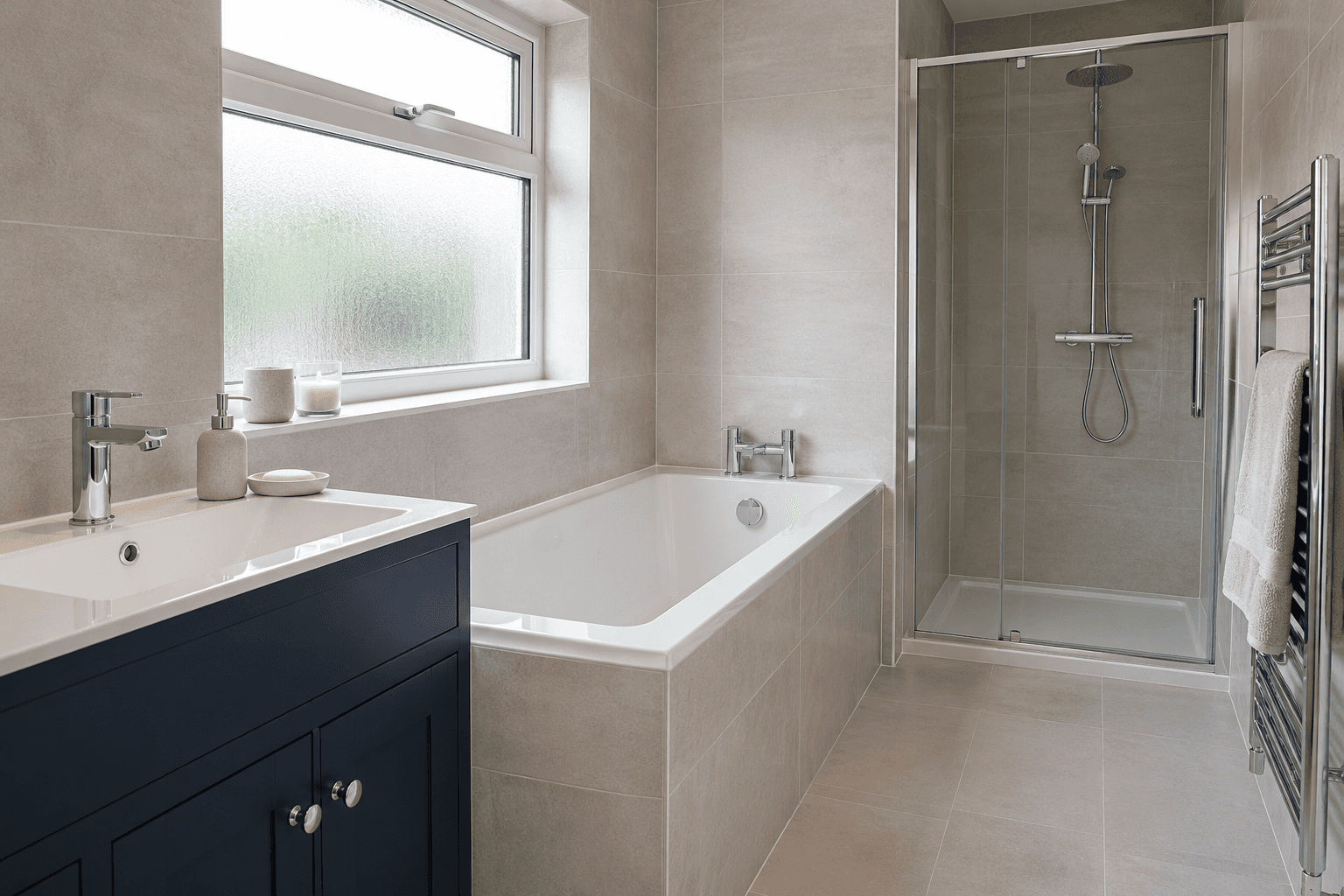
If mould has been a problem for years, a renovation is the chance to deal with the causes rather than the marks. That can mean fitting an extractor fan that suits the size of the room, adding a heated towel rail, renewing sealant and grout, and making sure the shower area is properly waterproofed.
Any new fan or wiring in a bathroom is electrical work and must be done safely by a suitably qualified electrician. We plan lighting and extractor fans as part of the renovation, which you can read about on our bathroom electrical work page. For the finish, we use mould-resistant paints made for steam and humidity, covered on our painting and decorating page.
Getting to the bottom of it
At Seby Bathroom Renovations, we plan ventilation, waterproofing and finishes together as part of the whole renovation. If you're planning a new bathroom and want one that stays fresh and dry, get in touch to arrange a visit.

Get in touch
Want a bathroom that stays fresh and dry?
Tell us what's happening in your bathroom and we'll arrange a visit to talk through a renovation that deals with the cause.
Contact Details
Folkestone, Kent
Mon - Fri: 8:00am - 8:00pm
Sat: 8:00am - 5:00pm
Sun: Closed