
How do you control dust during a bathroom renovation?
Most of the dust in a bathroom renovation is made in the first few days, when the old tiles, plaster and fittings come out. The way to control it is to clean the air in the room while work goes on and keep the dust from travelling to the rest of your home.
This post explains where bathroom renovation dust comes from, why the finest dust matters most, and what we do on every job to keep it down. It also covers a few simple things you can do before work starts.
Where the dust comes from
A bathroom renovation involves a lot of breaking, cutting and drilling in a small room. The dustiest jobs are:
removing old wall and floor tiles, along with the adhesive behind them
knocking off old plaster where walls need to go back to brick
cutting new tiles and tile backer boards to size
chasing walls, which means cutting channels for new pipes or cables
drilling into brick and block for fixings
sanding filler before decorating
Each of these throws up a mix of heavy grit, which drops to the floor, and very fine dust, which doesn't.
Why fine dust matters
The dust you can see settling on a landing or a skirting board is a nuisance. The dust you can't see is the bigger concern. Very fine particles can hang in the air for hours and drift through open doors and up stairwells long after the work has stopped.
Tiles, brick, concrete and mortar contain silica. Cutting or grinding them releases respirable crystalline silica, a dust fine enough to reach deep into the lungs. The Health and Safety Executive treats it as a serious health risk for people who work with these materials, and plaster dust can irritate the eyes, throat and chest too.
A few weeks of renovation in your home isn't the same as a working lifetime on building sites. But there's no good reason for your family to breathe it in, especially young children, older relatives, pets or anyone with asthma.
Cleaning the air while we work
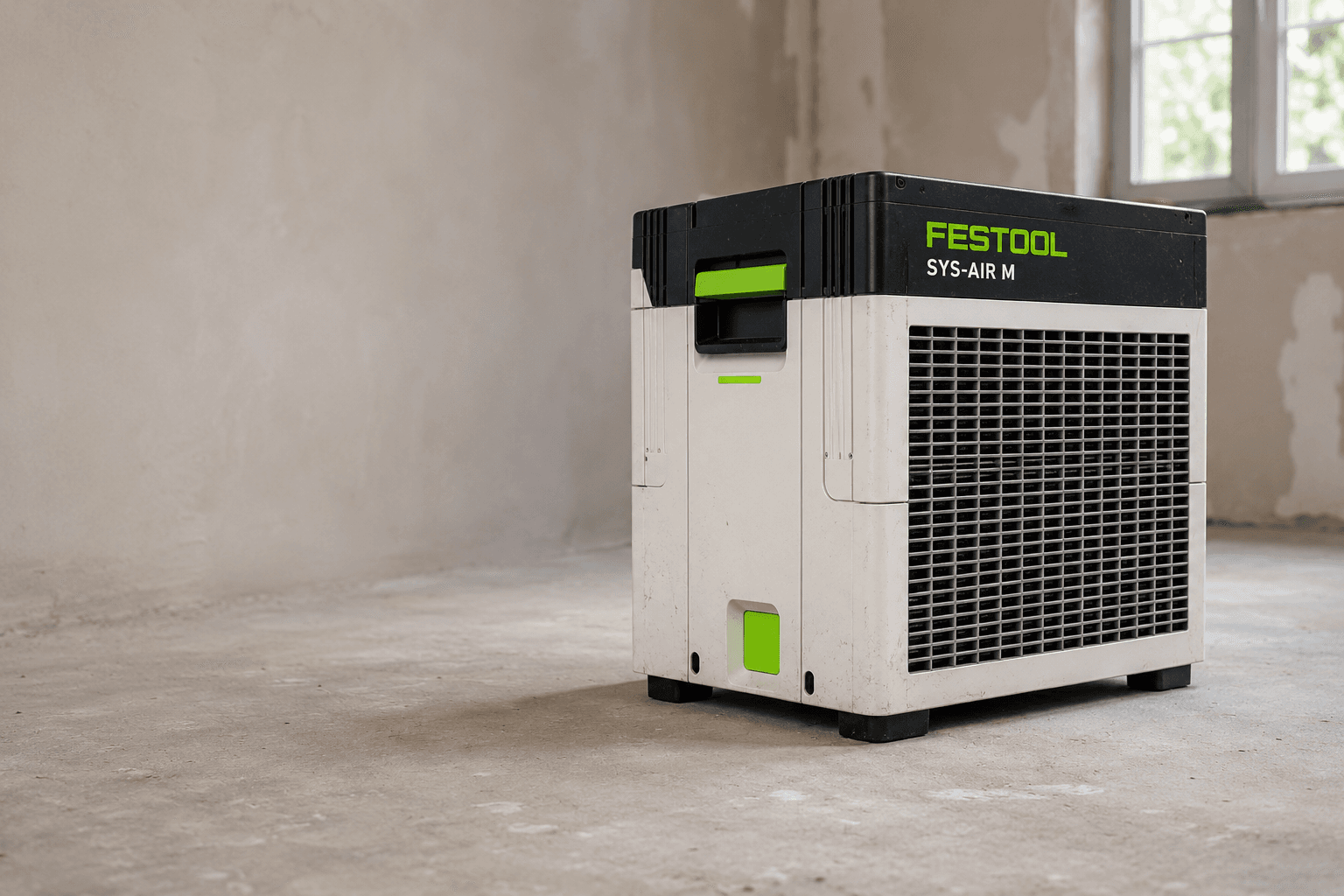
Some dust always gets into the air, however carefully the work is done. To deal with it, we run a Festool SYS-AIR M air purifier on site throughout the project. It draws in the air in the room, passes it through its filters and sends clean air back out, so less dust hangs in the air or settles on your floors and furniture.
Festool rates it to move up to 680 cubic metres of air an hour, enough to clean the air in a room of around 55 square metres three times an hour. That's many times the size of a typical bathroom.
What M-Class filtration means
Professional dust equipment is graded by the kind of dust it's built to handle, under a standard used across the UK and Europe:
L-Class, for low-hazard dust such as plaster, filtering out more than 99%
M-Class, for medium-hazard dust such as silica from tiles, brick and concrete, filtering out more than 99.9%
H-Class, for the most hazardous dusts, filtering out more than 99.995%
Our air purifier has an M-Class main filter, so it's built for the kind of dust a bathroom strip-out produces. An ordinary household vacuum isn't rated for this kind of dust, and the finest particles can pass through its filter and back into the room.
You can read more about the equipment on our dust control page.
Keeping dust in the bathroom
Equipment does most of the work, but habits matter too. We keep the work area clean and tidy throughout the project, not just at the end, so dust isn't walked through the house on boots or carried out with the rubbish.
Dust control is part of the job from the first day of strip-out to the final coat of paint. It isn't saved for a big clean on the last day.
What you can do before work starts
A little preparation helps keep the rest of your home cleaner:
clear the bathroom of towels, toiletries and anything stored in cupboards
move or cover anything kept on the landing or in the hallway outside the bathroom
keep the doors of nearby bedrooms closed while work is going on
keep pets away from the work area
let us know if anyone at home has asthma or breathing problems, so we can talk through the plan with you
A note on older homes
Some homes built or refurbished before 2000 have textured ceiling coatings, old floor tiles or other materials that can contain asbestos. Filtering the air doesn't make these safe to break up. If you think your bathroom has an old textured ceiling or old vinyl floor tiles, mention it when we visit, as it may need testing before it's disturbed.
Dust control with every renovation
At Seby Bathroom Renovations, air purification and careful dust control come with every bathroom renovation, alongside the plumbing, tiling, electrics and decorating. If you're planning a new bathroom and want to keep the rest of your home clean while it's done, get in touch to arrange a visit.
Get in touch
Planning a bathroom renovation?
Tell us about your bathroom and we’ll arrange a visit to talk through your plans, including how we’ll keep the dust down.
Contact Details
Folkestone, Kent
Mon - Fri: 8:00am - 8:00pm
Sat: 8:00am - 5:00pm
Sun: Closed